California · Wildfire insurance
Wildfire defense you can document for your insurer
Insurers are starting to look at what a house does to defend itself, not only at its zip code. FireShield gives you an automatic wildfire defense system — and the documentation to show for it.
What’s changing
Insurance in wildfire country is being rewritten
Non-renewals are up
Across California, carriers have been pulling back from high-risk areas, and more homeowners are landing on the FAIR Plan — the state’s insurer of last resort — often with less coverage for more money.
Mitigation is starting to count
California’s Safer from Wildfires framework ties home hardening to insurance, and carriers increasingly ask what a property has done to reduce its risk before they decide to write or renew it.
The house, not just the zip code
Wildfire risk models now score individual structures — roofs, vents, vegetation, ember exposure — rather than whole neighborhoods. What your home does to defend itself is becoming part of the conversation.
What you can show them
More than a sprinkler — a defense you can prove
Active defense that runs on its own
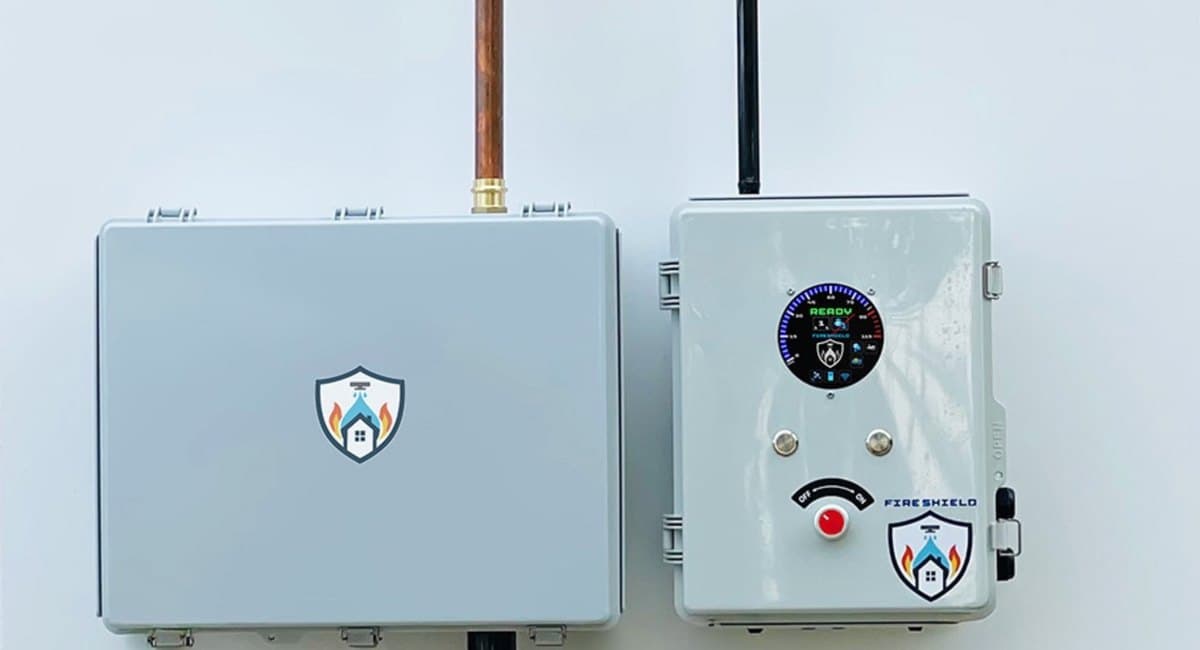
Automatic roof, eave and ground wetting with Class A foam, started by live fire data, running through an evacuation, on backup power, with Wi-Fi, cellular and satellite links.
A documentation package
Installation verification, maintenance records, annual inspections, readiness confirmation and a mitigation summary — the paperwork your insurer or broker can actually review.
Proof it is ready, not just installed
The system reports pressure, water supply, battery and connectivity continuously, so readiness is something you can show, not something you have to promise.
Talking to your insurer
Four steps to take to your agent or broker
01
Ask what mitigation they recognize
Every carrier is different. Ask your agent or broker which wildfire mitigation measures they consider when writing or renewing your policy.
02
Share your FireShield documentation
Give them the installation verification and mitigation summary. We prepare it for you and keep it current after each annual inspection.
03
Pair it with home hardening
Class A roofing, ember-resistant vents and a clear zone right around the house all matter. FireShield works alongside them, not instead of them — we will tell you what we see at the inspection.
04
Bring it up again at renewal
Underwriting keeps changing. Keep your documentation up to date and raise it every time your policy comes up.
FireShield is not an insurance company. We do not set premiums, eligibility or discounts, and we cannot promise that any insurer will offer coverage or a credit for installing a system — those decisions are made by insurers. No system can guarantee that a home survives a wildfire.
Free, no obligation
Get a free insurability assessment
Tell us where the property is and how to reach you. We will call to arrange a visit, look at the house the way an underwriter would, and tell you what FireShield would do there.
Prefer the phone? 1-833-NOFIRE1