The short version
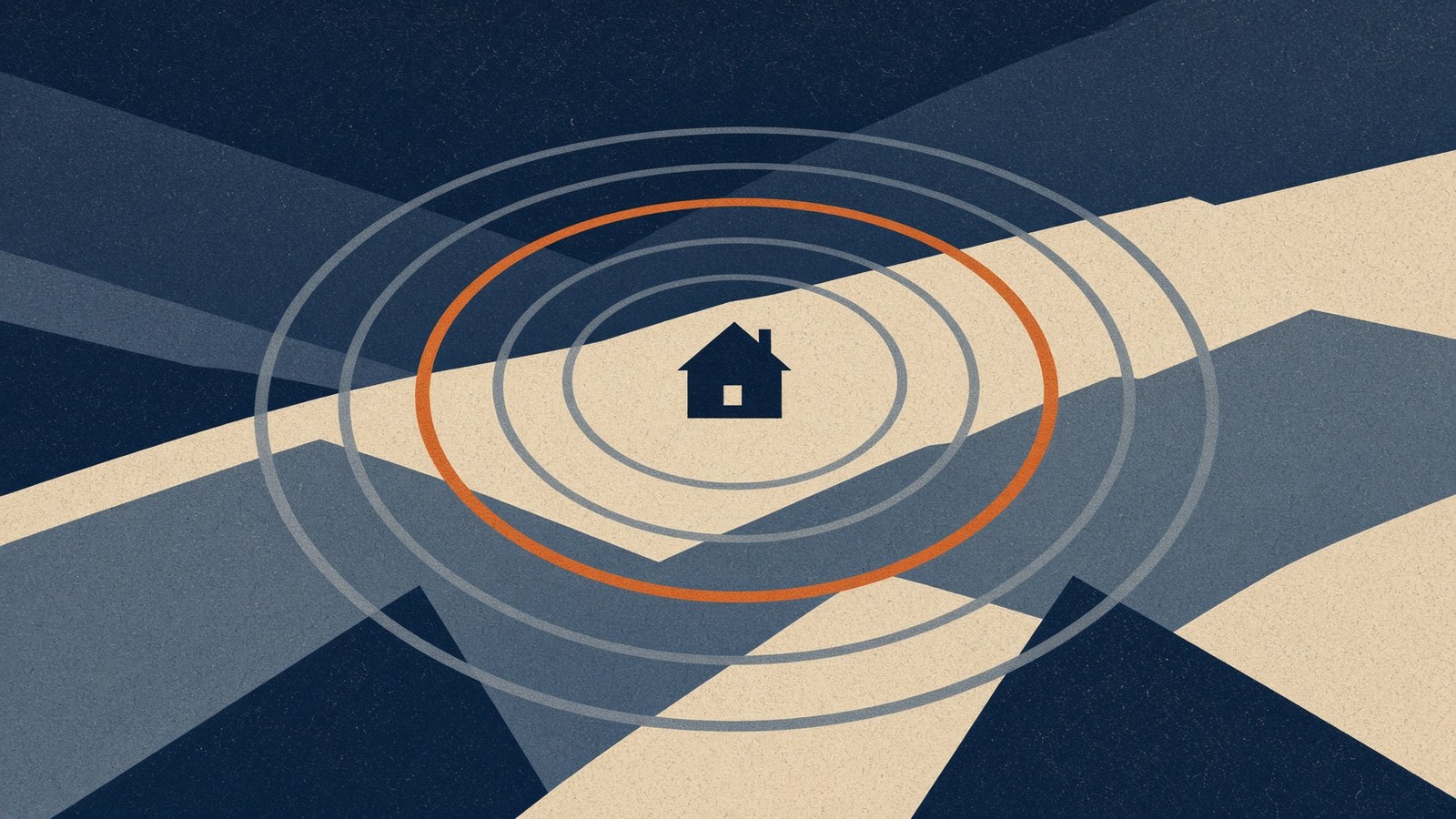
- Two numbers decide whether your roof is wet in time: how close a fire has to get, and how long the system waits before spraying.
- On FireShield both are sliders in the app. You set them, and you can change them from anywhere.
- They have to match each other. A wide distance with a short delay wastes water on fires that were never coming; a tight distance with a long delay starts too late.
- The app says so on the settings screen, in red, because it is the one setting people get wrong.
- You can disarm automatic activation entirely and still start the system by hand.
Every automatic wildfire system answers one question: when do I turn on?
The leading competing system publishes a clear answer. Fire within seven miles, ten-minute countdown in the app, and you can start it early or override it. As a default for a house the company has never visited, that is a sensible pair of numbers and it is honestly better than most of this industry manages.
But it is a default. And the right answer is not a property of the product. It is a property of your land.
Why seven miles is right for some houses and wrong for others
Fire does not travel at one speed.
Uphill through cured chaparral with a Santa Ana behind it, a front can cover ground frighteningly fast, and embers arrive well before the flame front — that is what actually ignites houses. A fire seven miles away in that configuration is a genuine emergency.
The same seven miles across an irrigated valley floor, with a river and two arterial roads in between, is a news item.
Same number. Completely different meaning.
If you are on a ridge above a canyon that runs towards you, you may want to start earlier than seven miles — the approach is fast and the consequence of being late is total. If you are on a flat suburban street with cleared lots around you, a tighter distance means fewer activations that were never necessary, less water used, and alerts you still take seriously.
On FireShield, the activation distance is a slider. Set it for your terrain.
The delay is the more interesting number
The delay is the gap between the fire crossing your line and water starting. It exists so you get a chance to look at your phone and make a call.
Both ends of the range are bad.
Too short and you cannot realistically intervene. You are asleep, or driving, or in a meeting. By the time you have unlocked your phone and understood what you are looking at, the system has started. You lose the ability to stop an activation you can see is not needed.
Too long and you have inserted a delay between a fire crossing your line and your house getting wet — the one place in the entire system where delay costs you directly. A fire that covers your activation distance faster than your delay will arrive at a dry house, and the system will start spraying while embers are already landing.
The two numbers are not independent. They are a pair. Your delay has to be comfortably shorter than the time a fire could plausibly take to cover your activation distance.
FireShield states this on the settings screen, in red, directly under the sliders:
Match the delay to your activation distance: wait too long and the fire can reach the house before the system starts.
Putting a warning in your own product's settings screen is an admission that the setting can be got wrong. We would rather say it there, where someone is actually about to move the slider, than leave it in a manual nobody opens.
Working out your own numbers
No formula survives contact with real terrain, but the questions are consistent:
- What is between you and the likely ignition areas? Continuous fuel, or roads, irrigated ground, rock, water?
- Which way does your land run? Fire moves uphill far faster than across or down. A canyon pointing at your house is a chimney.
- What are your prevailing wind events? In Southern California, the direction that matters is the one the Santa Anas come from.
- Where will you actually be? If you are usually forty minutes away, a delay you cannot act inside is a delay that only costs you.
Your installer should have an opinion about all four, and should be able to explain their reasoning rather than repeating a number.
Change it whenever it needs changing
These are not install-time settings you live with for a decade. They are in the app, and they can be changed from anywhere.
Which means they should track your life. Wider through a red flag week when you are away. Tighter in the wet season. Adjusted after a fire behaves in a way you did not expect, or after the lot next door is cleared, or after it is built on.
The same screen also decides which zones an automatic start will water, and lets you disarm automatic activation entirely while keeping manual start — for the week you are re-plumbing the pool, or any other time when a surprise activation would be an expensive nuisance.
What to ask
- At what distance does the system activate, and can I change it?
- How long does it wait before spraying, and can I change that?
- Can I change either one from my phone, or does it need a service visit?
- If I turn automatic activation off, can I still start the system by hand?
A fixed answer to the first two is not a failure — it is a design choice, and a defensible one. But it is a choice the manufacturer made about your land without seeing it. You are entitled to know that is what happened.