
The short version
- No house has enough water pressure to run every exterior sprinkler at the same time. Systems run zones in turn because physics requires it.
- FireShield lets you turn zones off — permanently, or in the middle of a run — and they drop out of the rotation.
- It also lets you give a zone more — a longer turn and more frequent turns — when that side of the house is the one in trouble.
- You can save named scenarios: roof only, front only, exposed face only. One tap, and FireShield waters just that group.
- If you're comparing FireShield with other systems, ask each of them: can I turn off a zone myself, while the system is running?
Start with the fact everything else follows from.
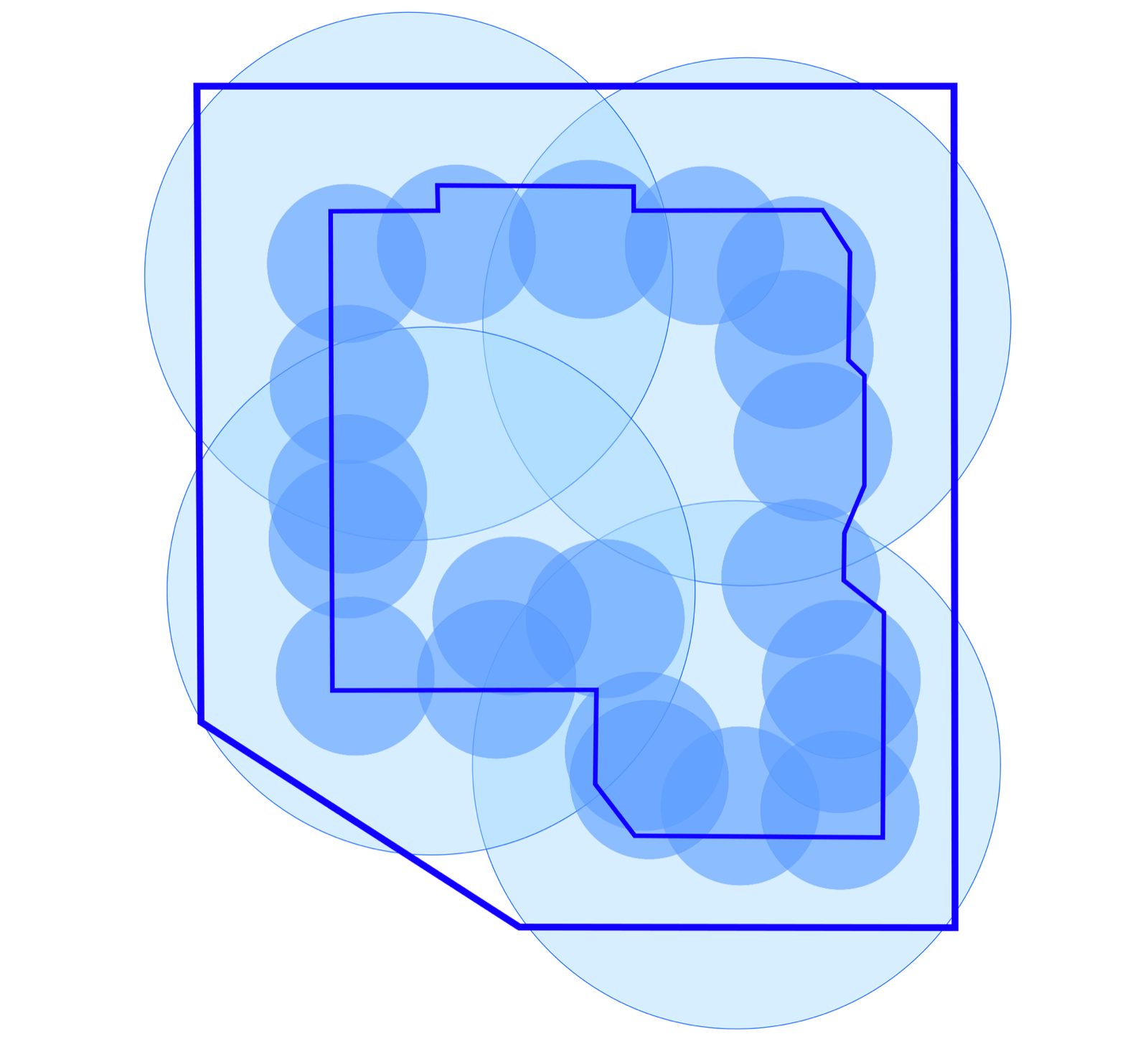
Your house has one water supply. A municipal line delivers somewhere around 50 to 90 pounds of pressure, and that pressure is shared by everything drawing on it. Put twenty sprinklers on your roof and eaves and open all of them at once, and you don't get twenty sprinklers. You get twenty dribbles.
FireShield's own patent states it plainly: available supply pressure is "generally insufficient to operate every discharge device simultaneously."
That's not a limitation of any particular product. It's the pipe coming into your house.
So every serious system divides the property into zones and runs them in rotation — a few at a time, each getting real pressure for a real interval, then handing off. Zones aren't a feature. Zones are the compromise physics forces on you.
Which raises the actual question: when your system can only water part of the property at a time, who decides which part?
Part 01: Turning zones off
The simplest version of choosing is choosing not to.
FireShield lets you exclude zones. The patent covers both routes — by setting, or during operation — and describes it precisely: FireShield "excludes a disabled zone from the activation sequence." The zone doesn't run dry or get skipped awkwardly. It stops being part of the rotation, and the water it would have used goes to the zones that are still in.
Why would you ever turn off protection? Real reasons, from real properties:
You just redid the deck. Beautiful new hardwood, freshly oiled. There's a zone that sprays right across it. For now, off.
The zone covers your neighbor's side yard more than yours. It happens on tight lots. You're paying for water that lands on someone else's gravel.
Something's wrong with it. A cracked line, a nozzle knocked off by a gardener, a head that's spraying a window instead of a roof. Rather than lose the whole system until someone can come out, you drop that one zone and everything else keeps working.
You're running low. This is the one that matters most. If you're on tank or pool water with a finite amount left, every zone you keep is a zone the water has to stretch to cover.
That last one deserves the emphasis:
Water you spend on the sheltered side of the house is water you don't have for the side that's exposed.
Part 02: Giving a zone more
The opposite move is the more interesting one.
FireShield can concentrate on chosen zones. Not just include them — favor them. The patent describes allocating a greater share of the sequence to selected zones "by at least one of a longer run-time and a more frequent activation within the activation sequence."
Both halves matter. A zone can get a longer turn, and it can get more turns. If your rotation is twelve zones and the fire is coming up the canyon behind you, the two zones on that side can run twice per cycle at seven minutes each while the front of the house gets one turn at three.
You're not watering evenly. You're watering correctly.
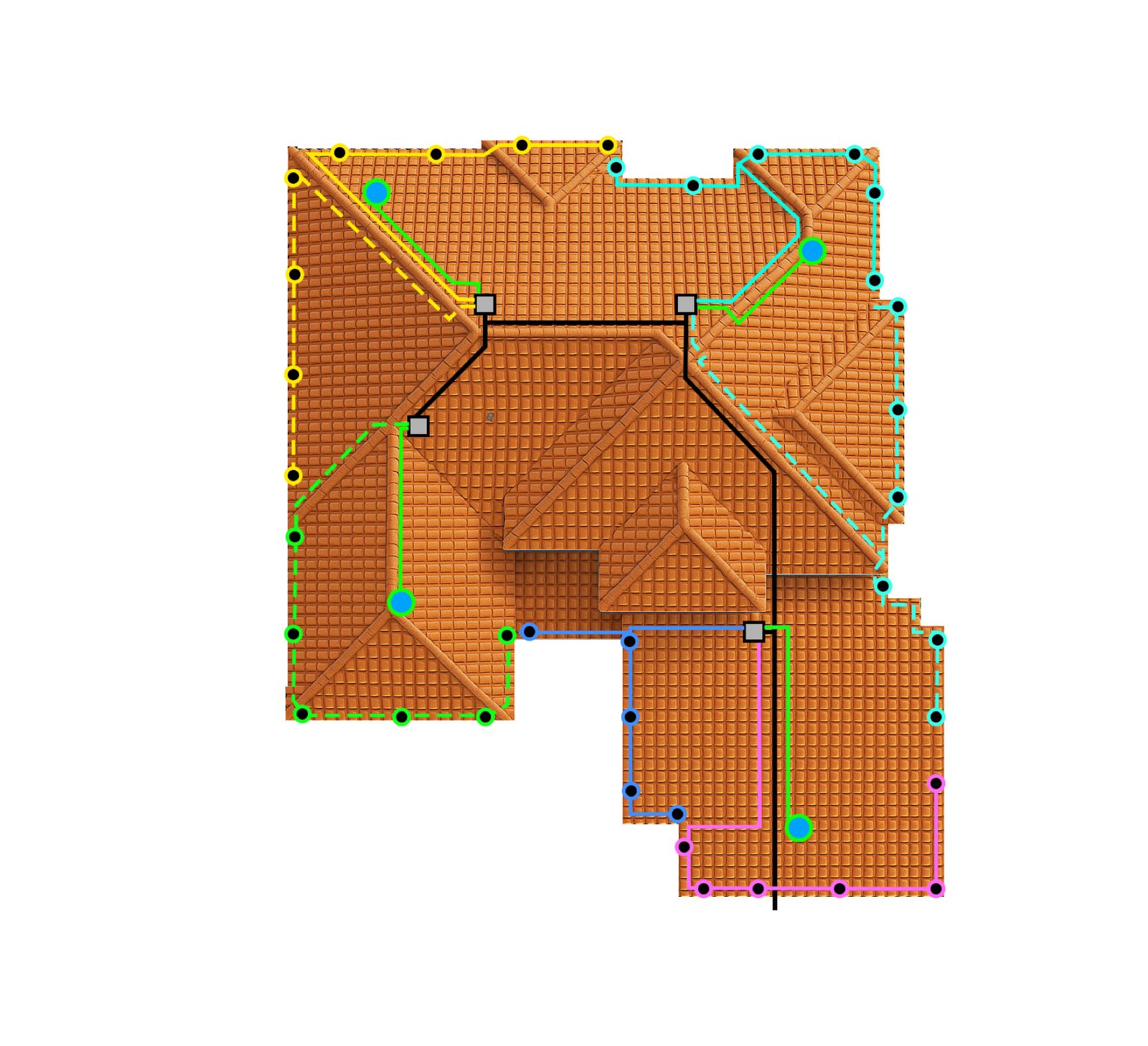
And FireShield doesn't need you standing there to do it. The same reassignment can be driven automatically from FireShield's risk analysis, which knows roughly where the fire is and which way the wind is pushing it. When the approach direction is known, FireShield concentrates on the outlets facing that direction — and, in the patent's own words, "excluding zones on the sheltered side."
That's a full article of its own, coming next in this cluster. The point here is that the mechanism — add zones, drop zones, weight zones — is the same whether a person decides or the system does, and all of it lives in the settings file.
Part 03: Scenarios, or one tap instead of twelve
Adjusting individual zones is fine when you're sitting calmly with the app open. It is not what anyone does with a fire eight miles away and a car half-packed.
So FireShield lets you save named scenarios — groups of zones you select in one move. The patent gives examples: a roof scenario, a front scenario, an exposed-face scenario. Pick one and FireShield waters only the zones in that group.
The versions that get used on real properties tend to be:
Roof only. Embers land on roofs. When water is short, this is often the whole game.
Exposed face. The side toward the canyon, the ridge, or whatever open ground is upwind of you.
Perimeter only. The brush line and the fence, and nothing on the structure — useful early, when you're wetting fuel rather than protecting siding.
Everything. Because sometimes you have plenty of water and the answer is simply yes.
The value of naming them in advance is that you choose them on a calm afternoon, not during an evacuation.
Part 04: The part that runs underneath all of it
Two mechanical details, because they're the reason zone selection works instead of just sounding good.
This is also one stage of a longer sequence — here is the whole chain, start to finish.
FireShield picks zone groups by measured pressure. It isn't running a fixed number of zones at a time and hoping. It reads actual supply pressure and energizes zones in subsets sized to that reading, so the sprinklers that are running hold their working pressure. If pressure sags, the groups get smaller. The sprinklers that are on stay effective.
Zones overlap on the handoff. When FireShield moves from one zone to the next, it opens the next valve before closing the last one. That sounds fussy and it isn't: it prevents the pressure spike and pipe slam you get from shutting a line abruptly, which over years is what cracks fittings and loosens roof-mounted hardware.
What to ask before you sign
| Question | Why it matters |
|---|---|
| Can I turn off a single zone? | With FireShield, yes — by setting or mid-run. Ask whether it's possible at all elsewhere. |
| Can zone run times differ? | FireShield sets run time per zone. A roof and a brush line don't need the same. |
| Can one zone get more turns than another? | FireShield can weight both length and frequency toward the exposed side. |
| Can I save preset groups of zones? | FireShield calls them scenarios — roof only, front only, exposed face. One tap. |
| How does it decide how many zones run at once? | FireShield sizes each group from measured pressure, so running sprinklers stay effective. |
Ask FireShield. Ask the competition. Ask anyone else you're considering.
Everyone selling you a wildfire system will tell you how many zones it has. That's the easy number.
The harder question — the one that decides whether your water lands where it matters on the day — is whether the system can choose among them. Turn some off. Favor others. Group them ahead of time. Change its mind while it's running.
FireShield can do all four.
Next in this series
- Water the Side the Fire Is Actually On — How FireShield uses wind and fire direction to pick zones automatically.
- Will It Drain My Pool for Nothing? — The two conditions FireShield requires before a pump ever runs.
- The Setting You Can Change in Ten Seconds — Why every one of these settings lives in a file, not in software.
- What Actually Has to Work When Nobody's Home — The whole system, start to finish, in plain English.
About FireShield — FireShield builds automated exterior wildfire defense systems for homes across Southern California. The system described here is covered by FireShield's patent. See the wildfire defense system or talk to us.